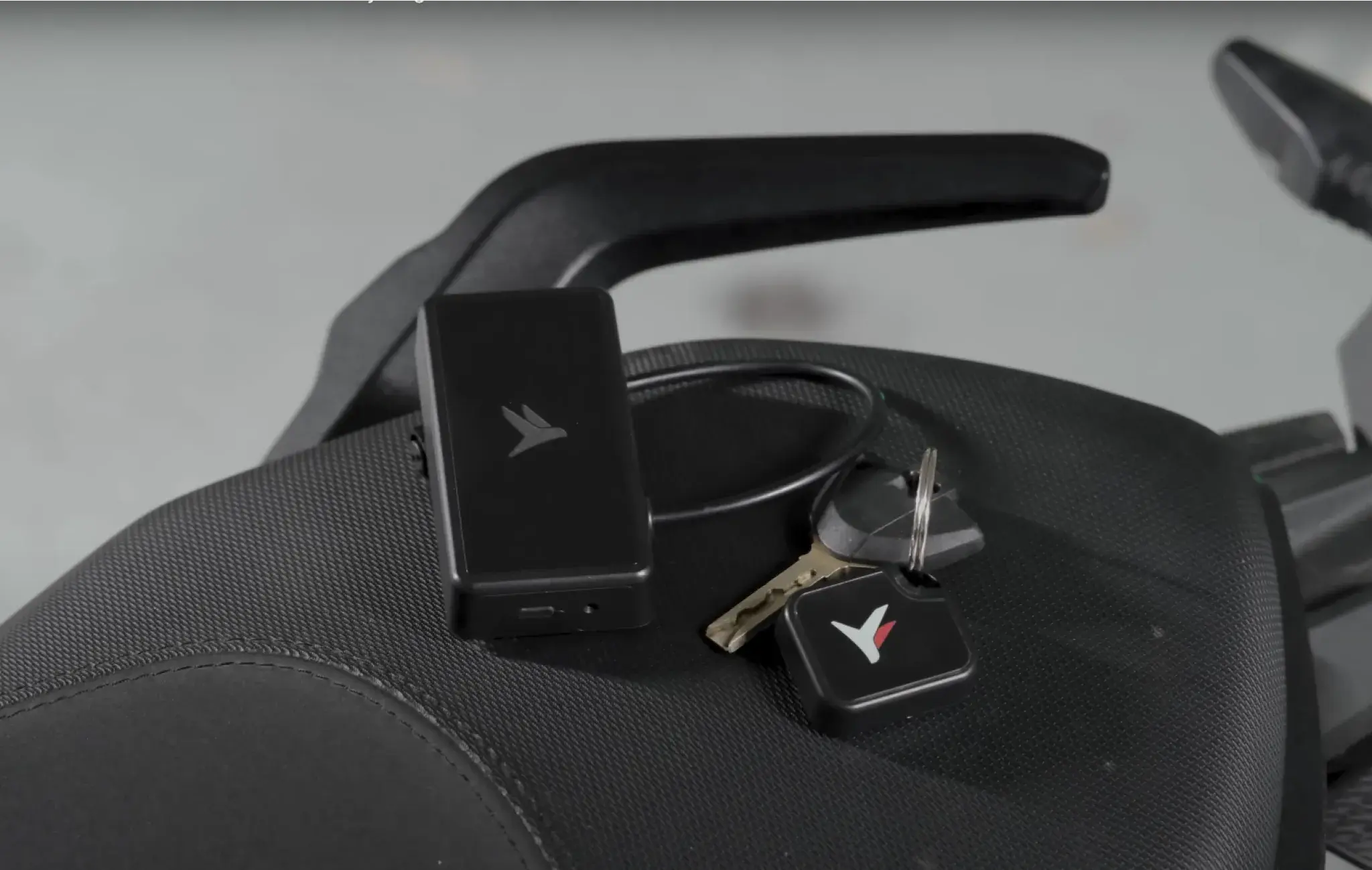
installation

Installation guide
The Flashbird GPS tracker is installed under the hood of your vehicle in 5 steps.
VIDEO TUTORIALInstalling your Flashbird deviceWatch our installation video to see step-by-step how to install your Flashbird GPS tracker.
STEP 1
Connect the power cable to your vehicle's battery
Your battery is typically located under the hood. The power cable of the Flashbird device ends with two black and red "forks" that allow you to connect it to the battery without disconnecting it. To do this, slightly loosen the screw of one of your battery terminals to slide the fork underneath and then tighten it. Start by doing this with the black cable to connect it to the negative (-) terminal of your battery, and then with the red cable to connect it to the positive (+) terminal of your battery.
STEP 2
Connect the device to its power cable
Connect the Flashbird device to its power cable (the one you just connected to the battery), making sure to tighten the fastening ring properly. An alignment pin shows you the correct connection direction.
STEP 3
Install the device on your vehicle
In your package, you'll find a double-sided Velcro strap that allows you to attach the Flashbird device anywhere under your vehicle's hood. However, for Flashbird to function correctly, it's imperative to meet the following two conditions:
- Install Flashbird so that there is nothing but your vehicle's fairing between it and the sky. There should be nothing obstructing the view between Flashbird and the sky when you're driving.
- Flashbird must always be fixed with its upper side (the one with the logo attached) facing the sky.
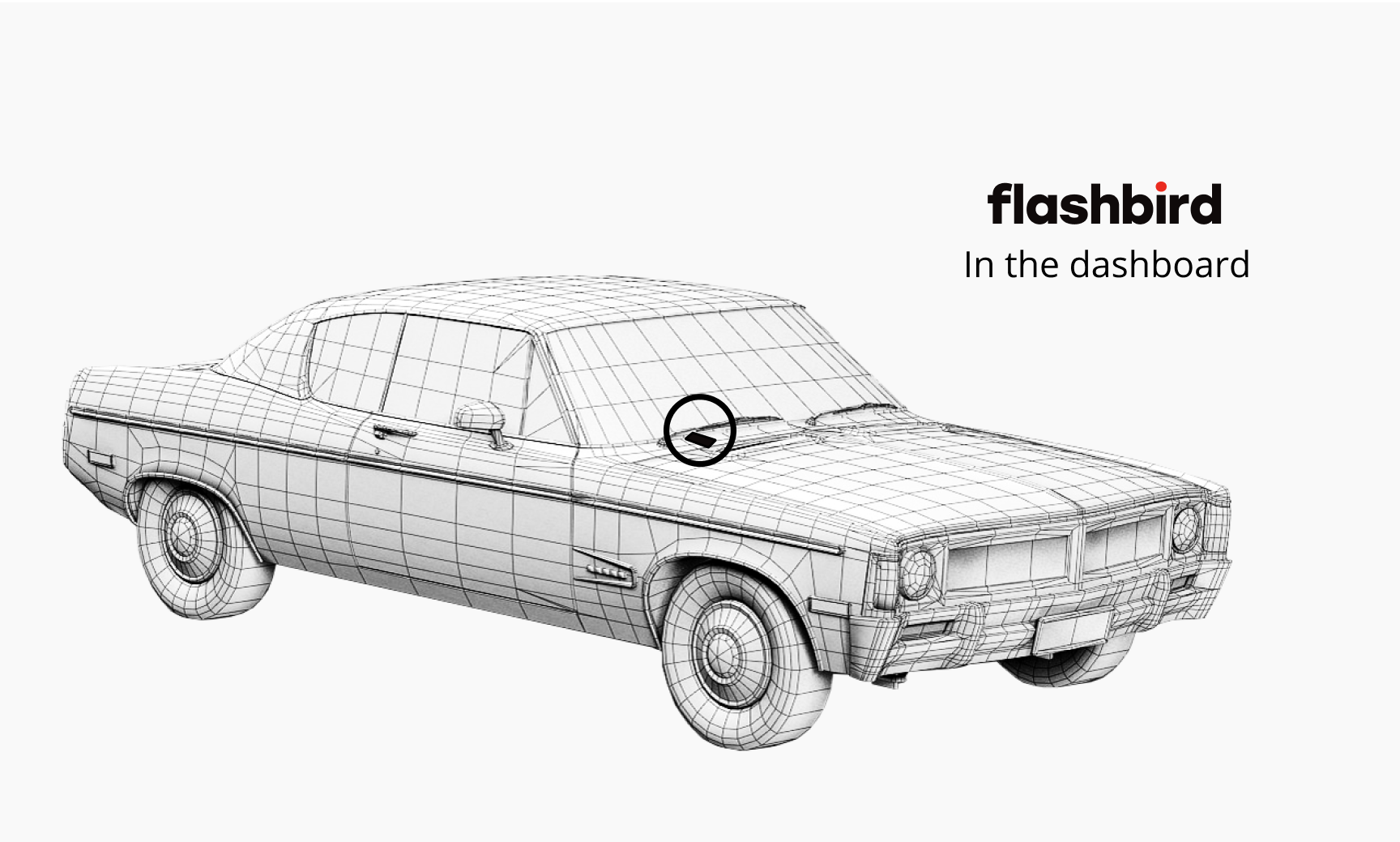
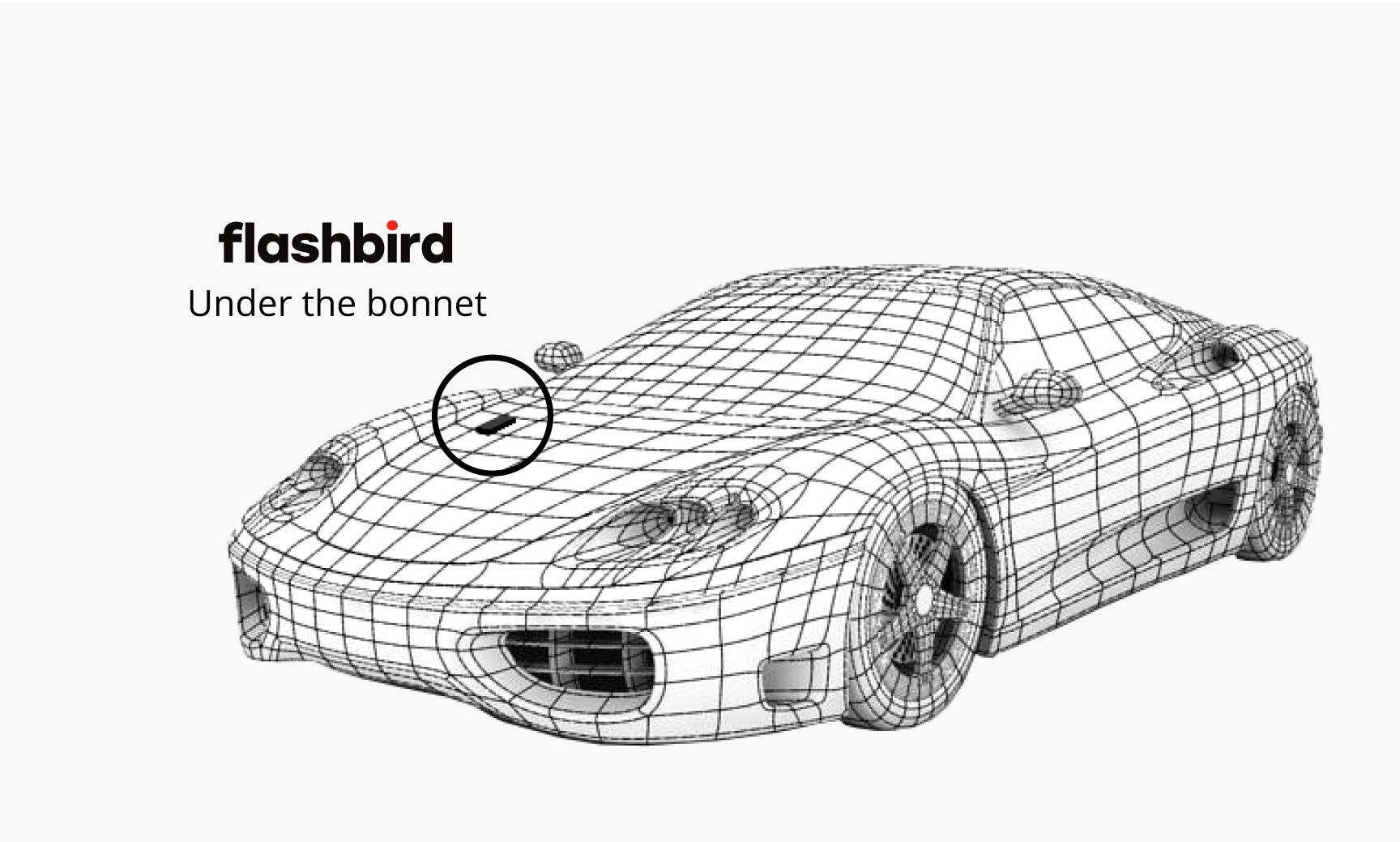
The easiest way to meet these two conditions is to attach the device under the hood of your vehicle, which is located at the front of your vehicle, as shown in the diagram below:
STEP 4
Launch the Flashbird App (by Pegase)
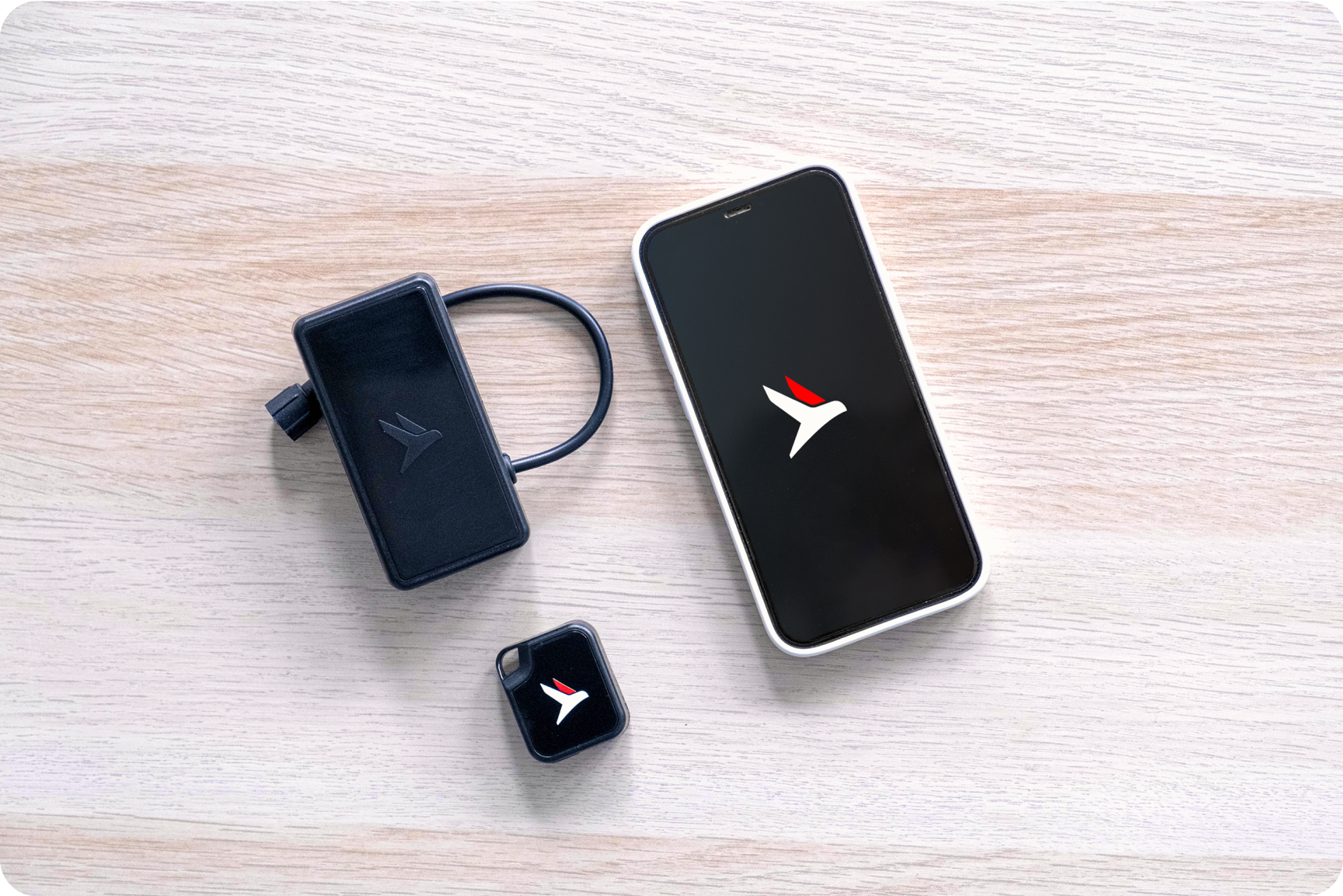
Install the "Flashbird" application that you can find on the AppStore or the Google Play Store. Then, follow the on-screen instructions to create your account and provide the information about your device and your vehicle.
Please enter a country to know if you can use Flashbird
STEP 5Drive with your Flashbird
The Flashbird device will only start functioning after you have driven a few kilometres. At the end of your first journey, relaunch the application on your smartphone and begin exploring all the features offered by Flashbird.
Flashbird Original Auto works in more than 190 countries around the world!
Flashbird works in most countries around the world. Check below whether your area is covered:
Please enter a country to know if you can use Flashbird
Please enter a country to know if you can use Flashbird

How to choose a GPS tracker?
GPS trackers (sometimes called "GPS tags" or "trackers") are products designed to geolocate and track in real time cars, karts, vans, motorhomes, buggies, or quads with a 12V battery.
Their responsiveness during live tracking is often described as how often the position updates. Depending on the model, Flashbird trackers can update about once per second (Flashbird One and Flashbird Ultra) or about every 10 seconds (Flashbird Air), subject to network conditions.
Battery life depends on the internal battery, whether the tracker is wired to the vehicle, and how you use it: battery-powered models like Flashbird Air recharge via USB-C, while wired models recharge from the vehicle while the engine is running.
Size is also important when choosing a GPS tracker. Pegase and Flashbird Original (wired) are very compact; Flashbird One and Flashbird Ultra remain easy to hide, while Flashbird Air is larger because of its built-in battery.